Home security is an important part of protecting your family and personal belongings. Your door locks are the first line of defense against unauthorized access, but they may not always provide the level of security your home needs. Over time, keys can get lost, locks can become damaged, or you may move into a property where previous owners still have copies of the keys.
In these situations, homeowners often face an important question: Should they rekey their existing locks or replace them completely? Understanding the difference between these two options can help you make a better decision based on your home’s security needs and budget.
Understanding the Difference Between Rekeying and Replacing Locks
Before deciding which option is right for your home, it is important to understand how rekeying and lock replacement work.
What Is Lock Rekeying?
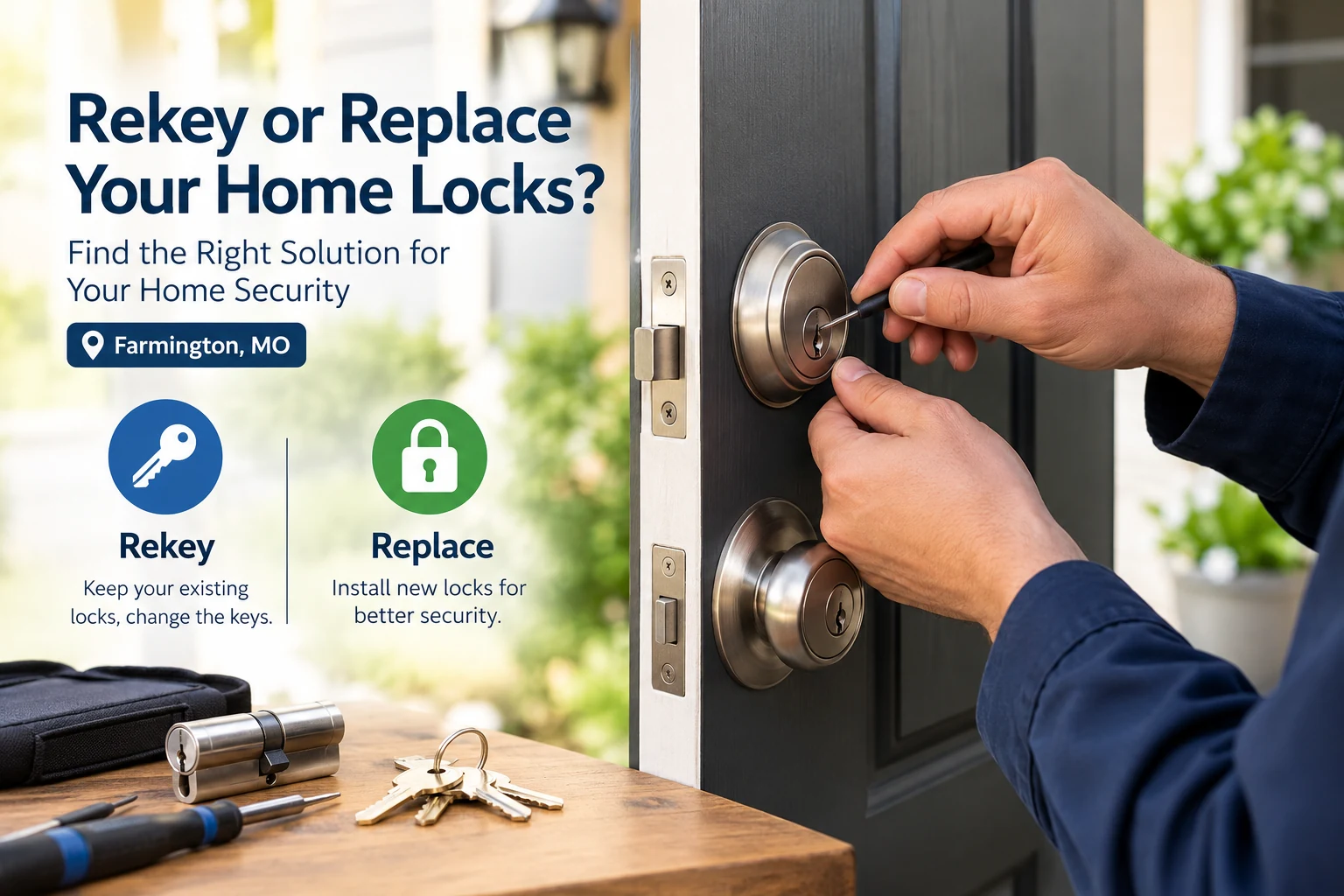
Rekeying is a process that changes the internal pin configuration of an existing lock so that old keys no longer work. A locksmith adjusts the lock cylinder and provides a new key that operates the updated lock.
This option is useful when your existing locks are still in good condition but you want to prevent previous keyholders from accessing your property.
What Is Lock Replacement?
Lock replacement involves removing an existing lock and installing a completely new one. This may include upgrading to a stronger deadbolt, installing a modern locking system, or replacing a damaged lock.
Replacement is generally recommended when the existing lock is worn out, broken, outdated, or no longer meets your security requirements.
When Should You Rekey Your Home Locks?
Rekeying can be a practical solution when your locks are working properly but you need better control over who has access to your home.
Here are some common situations when rekeying may be the right choice.
1. After Moving Into a New Home
When you purchase or rent a new property, you may not know how many people have copies of the existing keys. Previous homeowners, tenants, contractors, or maintenance workers could still have access.
Rekeying your locks helps ensure that only people with the new keys can enter your home.
2. When You Lose Your House Keys
Losing your house keys can create a security concern, especially if your keys are attached to something that identifies your address.
If you cannot determine where the keys were lost, rekeying can prevent someone from using the missing keys to access your property.
3. After Changing Tenants or Roommates
If a tenant moves out or a roommate leaves, you may not receive every copy of the original key. Rekeying can restore control over access without requiring you to replace the entire lock.
4. When You Want to Use One Key for Multiple Locks
Some homeowners have different keys for their front door, back door, and garage entry. Depending on the lock types and compatibility, a locksmith may be able to rekey multiple locks to work with one key.
This can make everyday access more convenient.
When Should You Replace Your Home Locks?
Although rekeying is useful in many situations, there are times when installing new locks is the better option.
1. When Your Locks Are Damaged
Locks that are difficult to turn, frequently jam, or have broken internal components may need complete replacement. A damaged lock can create inconvenience and may affect your home’s security.
2. When Your Locks Are Old or Outdated
Older locking systems may not offer the same level of security as modern options. If your current locks have outdated designs or show signs of significant wear, upgrading them can be a sensible investment.
3. After a Break-In or Attempted Burglary
If someone has attempted to force open your door, the lock or surrounding hardware may have been damaged. Even if the lock still works, it should be inspected to determine whether replacement is necessary.
A professional locksmith can evaluate the damage and recommend an appropriate security upgrade.
4. When You Want to Upgrade Your Home Security
Homeowners may choose to replace traditional locks with modern deadbolts, high-security locks, or smart locking systems.
These options can provide additional features, such as improved resistance to forced entry, keyless access, and convenient entry management.
Rekeying vs. Replacing Locks: Which Option Is Better?
Both options can improve home security, but the right choice depends on the condition of your existing locks and your specific requirements.
Consider these differences:
- Cost: Rekeying is generally less expensive because the existing lock hardware remains in place.
- Security: Both options can improve security when properly completed. However, replacement may be necessary if the current lock is damaged or outdated.
- Convenience: Rekeying can allow multiple compatible locks to operate with one new key.
- Long-term value: Replacing locks can be worthwhile when you need stronger hardware or additional security features.
The best solution is not always the most expensive one. A professional inspection can help determine whether rekeying is sufficient or whether replacement is necessary.
Why Professional Locksmith Services Matter
Working with a qualified locksmith can help homeowners avoid common installation mistakes and choose suitable locking solutions.
A professional can:
- Inspect existing locks for wear and damage.
- Determine whether rekeying is possible.
- Recommend appropriate replacement locks.
- Install and test new locking hardware.
- Help improve overall door security.
- Explain how to maintain locks properly.
If you are unsure which option is right for your property, consulting a locksmith Farmington MO can help you understand the available solutions and make an informed decision.
Tips to Keep Your Home Locks in Good Condition
Regular lock maintenance can help extend the life of your locking hardware and reduce unexpected problems.
Here are some simple practices homeowners should follow:
- Check your locks regularly: Look for loose screws, visible damage, or unusual resistance when turning the key.
- Avoid forcing keys: If a key does not turn easily, forcing it may damage the key or internal lock components.
- Keep spare keys secure: Store spare keys in a safe and reliable location.
- Address problems early: Do not ignore locks that frequently stick or become difficult to operate.
- Review access after major changes: Consider rekeying when moving into a new home or changing who has access to your property.
These basic steps can help maintain reliable locks and support better home security.
Final Thoughts
Choosing between rekeying and replacing your home locks depends on their current condition, your security concerns, and your future requirements. Rekeying is often a practical choice when existing locks are in good condition, while replacement is more suitable for damaged, outdated, or unreliable locking systems.
Taking the time to evaluate your home’s locks can help prevent access-related problems and improve everyday security. If you need assistance deciding between these options, FNF Lockout LLC can help you explore suitable locksmith solutions for your home in Farmington, Missouri, and surrounding communities.